"Is it like a normal massage?" is probably the question I'm asked most. The honest answer is: not really. Here's how lymphatic drainage massage compares with the two massages most people already know, so you can choose the one that fits what your body needs.
At a glance
| Lymphatic drainage | Swedish | Deep tissue | |
|---|---|---|---|
| Pressure | Very light | Light to moderate | Firm to deep |
| Works on | Skin and the superficial lymph vessels just beneath it | Surface muscles and overall circulation | Deeper muscle layers and connective tissue |
| Movement | Slow, rhythmic skin stretching in the direction of lymph flow | Long gliding strokes, kneading, circles | Slow, focused pressure on tight areas |
| Often chosen for | Feeling heavy or puffy, deep relaxation | General relaxation and easing everyday tension | Stubborn knots, muscle tightness |
| How it feels | Soothing, almost hypnotic | Relaxing and familiar | Intense, sometimes uncomfortable |
| Oil | Little or none, so the skin can be gently stretched | Yes | Usually |
Lymphatic drainage massage
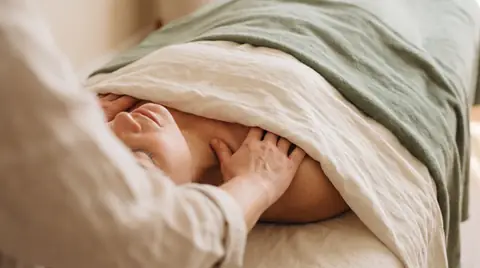
Lymphatic drainage massage is designed around the lymphatic system, the network that carries fluid from your tissues back to your bloodstream. Much of that network starts just under the skin in fine vessels that open when the skin is gently stretched. Firm pressure squashes them, so the technique stays deliberately light, slow and directional.
It's a good choice if you often feel heavy, puffy or sluggish, if you spend long hours sitting or standing, or if you want a treatment that's about calming your whole system rather than working out knots. Read my full guide to lymphatic drainage massage.
Swedish massage
Swedish massage is the classic relaxation massage: long, flowing strokes, kneading and circular movements with oil, at a pressure you can usually adjust. It's lovely for general tension and relaxation, and it's what most people picture when they think "massage".
Deep tissue massage
Deep tissue massage uses much firmer, slower pressure to reach deeper layers of muscle. It's often chosen by people with persistent tightness from sport, posture or physical work. It can feel intense, and you may feel a bit tender for a day or two afterwards.
Can deep pressure "drain" the lymphatic system better?
No, and this is a common misunderstanding. More pressure isn't more effective here. The superficial lymph vessels respond best to gentle skin stretching, and heavy pressure can compress them. If a "lymphatic" treatment is painful, it isn't really following the principles of lymphatic drainage.
Which should you choose?
- You feel heavy, puffy or bloated-feeling, or just frazzled: lymphatic drainage massage.
- You want a classic, all-round relaxing massage: Swedish.
- You have specific tight, knotted muscles: deep tissue, or a sports massage therapist.
- You have swelling linked to a medical condition: speak to your GP first, who may refer you to a specialist lymphoedema service.
At Willow & Flow I currently specialise in one treatment, a 60–90 minute full-body lymphatic drainage massage in Llandudno, because I'd rather do one thing properly. If you're not sure it's right for you, get in touch and I'll happily talk it through.
Lymphatic drainage massage in Llandudno
60–90 minutes · £65 · women only · North Wales Nail & Beauty, 24 Brookes Street, Llandudno LL30 2TT
Request an AppointmentFrequently asked questions
Is lymphatic drainage massage painful?
Which is better, lymphatic drainage or deep tissue massage?
Further reading & sources
This article is general wellbeing information, not medical advice. Lymphatic drainage massage at Willow & Flow is a relaxation and wellbeing treatment, not a medical treatment. If you have a health condition or symptoms, please speak to your GP.